A workshop series forcommunity organisers ready to embrace the mess of conflict, power & identity
Embrace the Mess (EtM) is an adaptable workshop series aimed at supporting local community organisers to deepen their organising, specifically around themes of conflict, power and identity.
EtM starts where most organising tools stop working, making room to explore the contradictions, the fuzzy edges and the unanswerable questions that play out in so many of our communities, with others who are also grappling with them.
When faced with the countless personal issues and systemic injustices of all of our day-to-day lives, it’s clear how much more art-than-science organising in multiethnic and working class communities is. We may not have all the answers, but EtM offers spaces where we can support one another to test the edges of the tools and skills we’ve learned, share experiences that have worked for us in practice and critically, start to get more comfortable in the uncertainty of it all.
In coming together with these questions, we can navigate the messy dynamics of our communities with greater self-awareness, sensitivity and understanding of how power operates in our groups, supporting one another to create change that lasts.
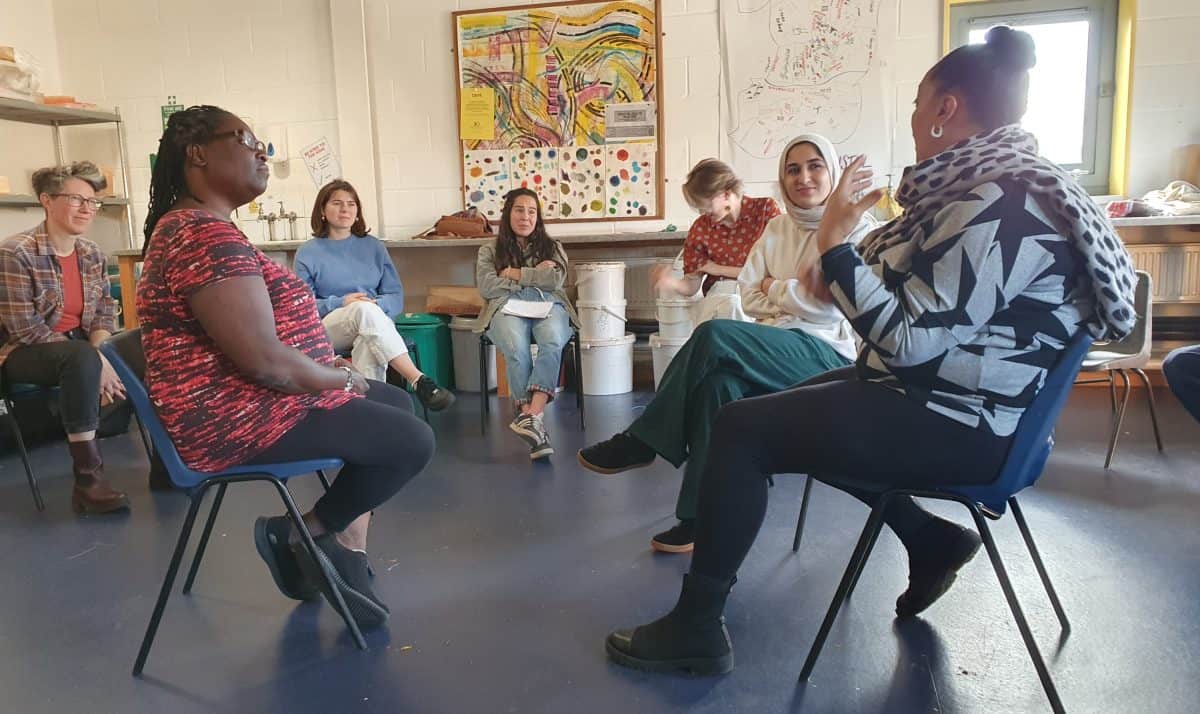
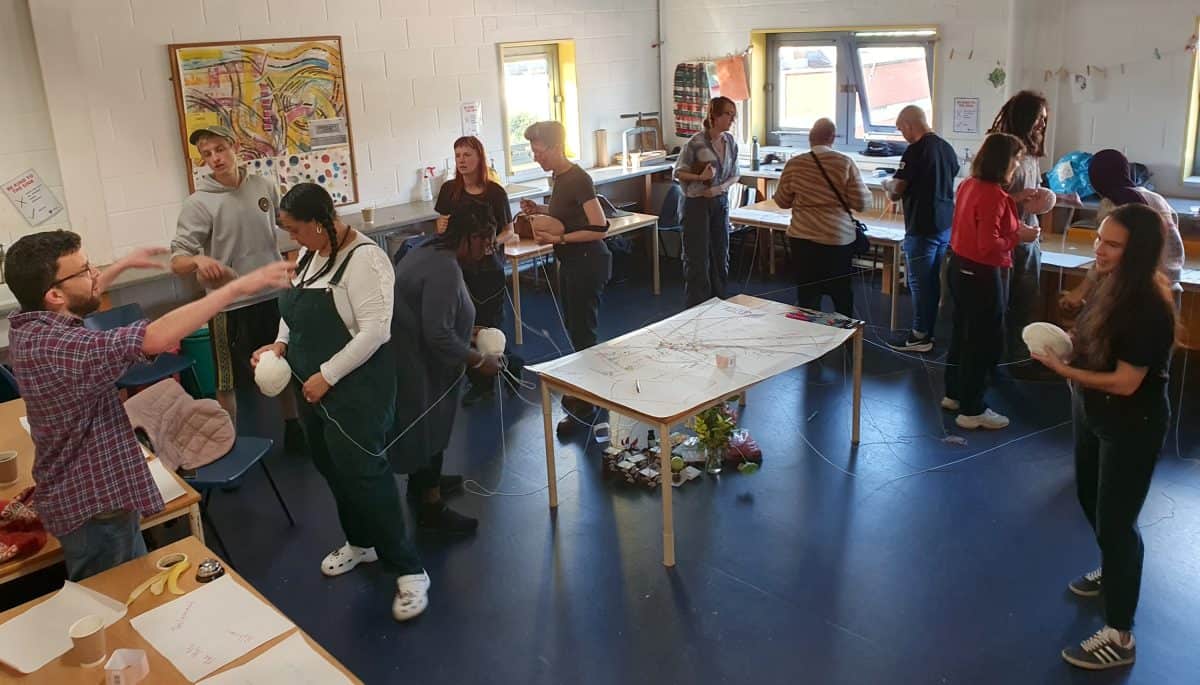
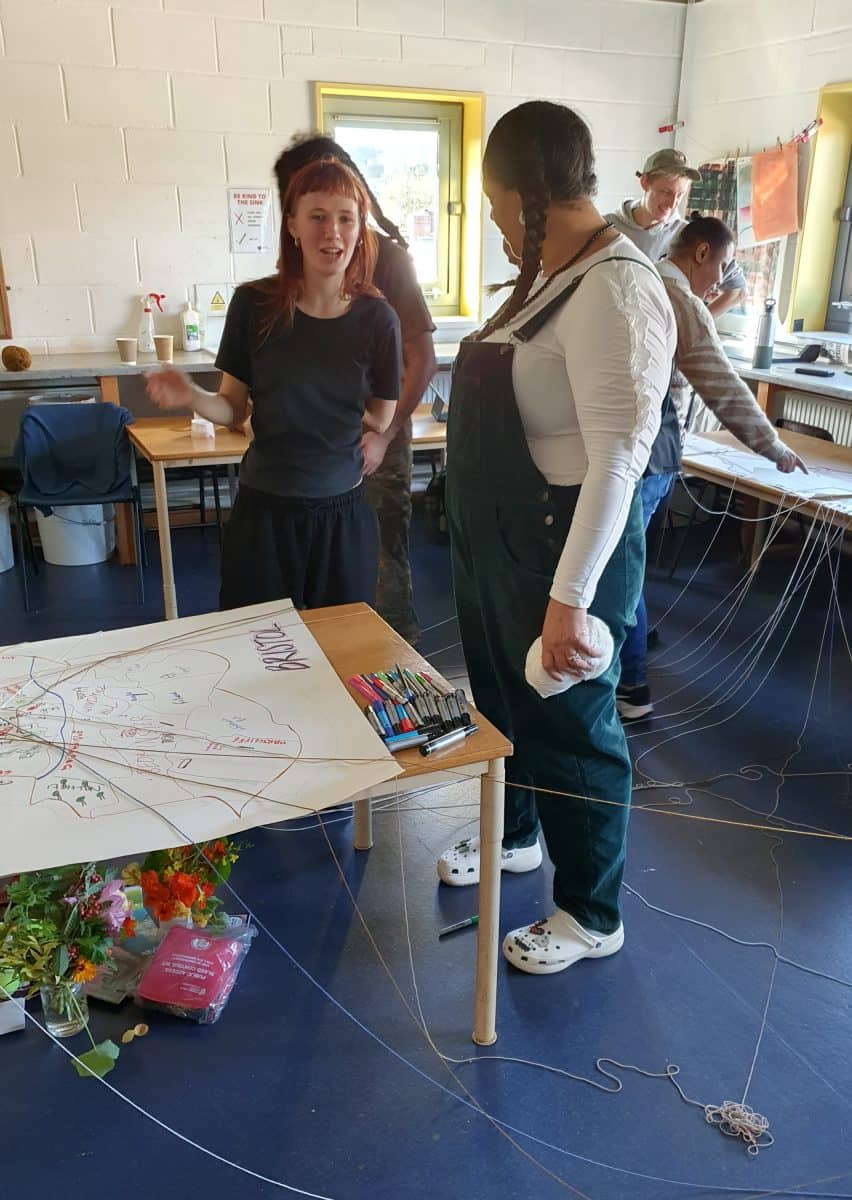
Can we afford to take the time needed to build deep relationships in communities, when the issues at hand are so pressing?
How can we work through the kinds of internal conflicts that are everywhere in communities facing overlapping layers of trauma and oppression?
How should we respond when the lived experiences of members of a community, have led to attitudes or conclusions that are in conflict with the values we want to support?
Who it’s for?
The focus is those doing local area-based community organising, but it may also feel relevant to folks organising with communities of interest, identity, workplaces and grassroots political campaigns.
Embrace the Mess is for:
- Community organisers who are operating around the limits of the tools they have learned in organising training and want to go further.
- People coming into community organising from other traditions, such as campaigning, direct action or case work, looking to understand how to engage in community space, respectfully and effectively.
- Trade union organisers who have struggled with the limitations of more prescriptive models, particularly in non-traditional workplaces.
Why it exists?
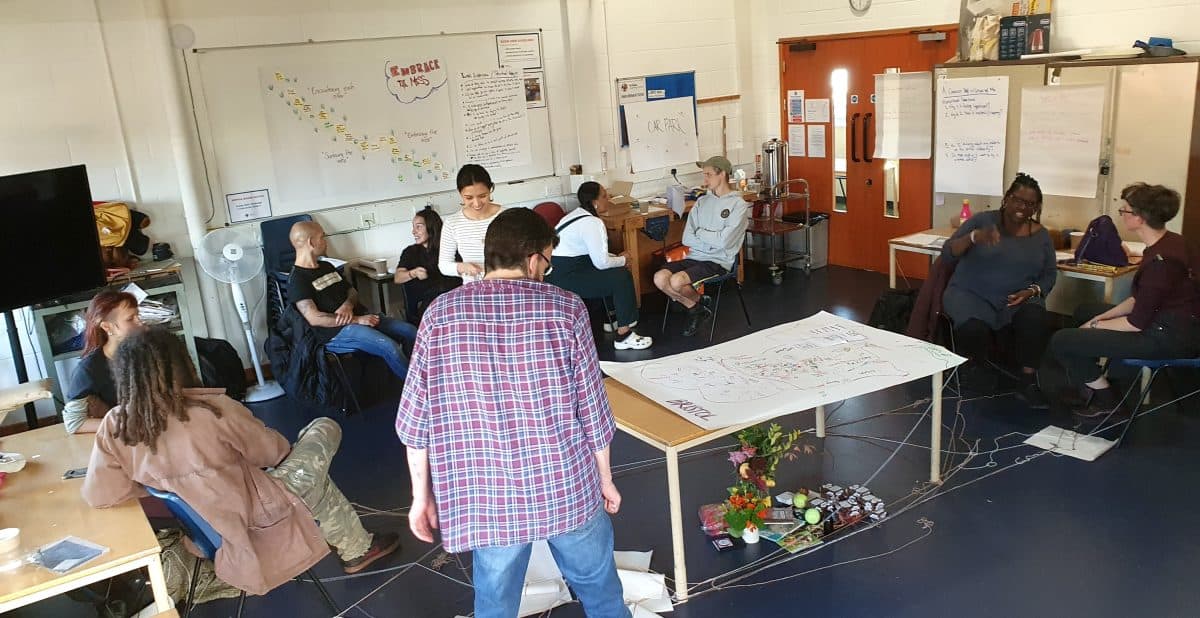
Since the Corbyn loss of the 2019 election, many progressive groups in the UK have begun to (often reluctantly) look beyond electoral politics to build power and re-establish relationships in marginalised and working class communities where they have been lost. Lessons from small pockets of the UK (but mostly from the US) have led many groups and organisations to look to community organising as an alternative way of building a progressive base from which social change can happen. The term ‘community organising’ is turning up in more and more organisational strategies and job descriptions in recent years, but understandings of it are limited, often being framed by the policy influencing, advocacy and campaigning work that these organisations have done for years or decades before.
We see the embrace of community organising as an important and positive development in many social movement spaces, because it reshapes how many are thinking about power and change, grounding it in the communities of those most affected by ‘politics as usual.’ Unfortunately though, there are some significant gaps in understanding and support available for social movement actors to access, as they are shifting their understandings of building collective power away from the structures of the state.
Much of the community organising theory and training that is currently available, has been grounded in trade union and political campaign organising. Many of the lessons from organising in these more structured environments have been incredibly important when adapted for the relative-structurelessness of most working class and multiethnic communities. But even amongst the best trainings, there’s a depth that’s consistently missed when it comes to facing the kinds of complexities that appear when trying to organise in many communities.
These communities are often the spaces where some of the sharpest intersections of oppression are playing out; the stresses left by working under poor labour conditions, experiencing racist policing, exploitative landlords, and the Home Office’s hostile environment, for example. Community organising happens around the places people live and thus often involves facing the impacts and realities of all these things at once.
Additionally, the dynamics of power and conflict that are constantly playing out within and between different sections of a community – sometimes patriarchal, sometimes generational, sometimes interpersonal – cannot be ignored, when so deeply intertwined in the lives of those you are organising with. Organising training tends to give very little space to even acknowledge – let alone work effectively with – this kind of complexity. What does an organiser do when a brilliant organic leader starts to demonstrate strongly patriarchal behaviours? Or when two members with different communities come into active conflict, disrupting the organising work? Or simply when the chaos of daily life regularly impedes the involvement of so many local people? The structures that allow for some semblance of order within a workplace or election campaign are often totally absent in frontline community settings, meaning that a different way of organising is necessary.
This is where Embrace the Mess has come from; experienced organisers who have come up against the limitations of their organising toolkits and want to create space for one another to explore and get comfortable with the kinds of community dynamics no one tells you about, before you’re immersed in them. If community organising is going to become the significant force that many believe it can and should be in the UK, it will need to support community organisers to navigate particularly complex local dynamics, where there are no clear-cut ‘right answers.’ It’s ‘the organising behind the organising,’ that makes the more visible work possible.
Who is doing it?
Tatiana Garavito, Dom Hunter and Liam Barrington-Bush are the facilitators who have developed and delivered this material.
Early development stages were also supported by Joshua Virasami and Ewa Jasiewicz.

Tatiana Garavito
she/her
I am an organiser and facilitator working on issues at the intersection of migration, race, and climate justice. With extensive experience in social justice leadership and liberation processes, I also co-leads care & repair efforts at Tipping Point UK. I am a member of the Post-extractive Futures collective, dedicated to building networks of solidarity, nurturing dreams, fostering co-inspiration, and sharing essential skills for ongoing struggles within a broader framework of care and collaboration. I live between Belfast, North of Ireland and Fusagasugá, Colombia.

Dom Hunter
he/him
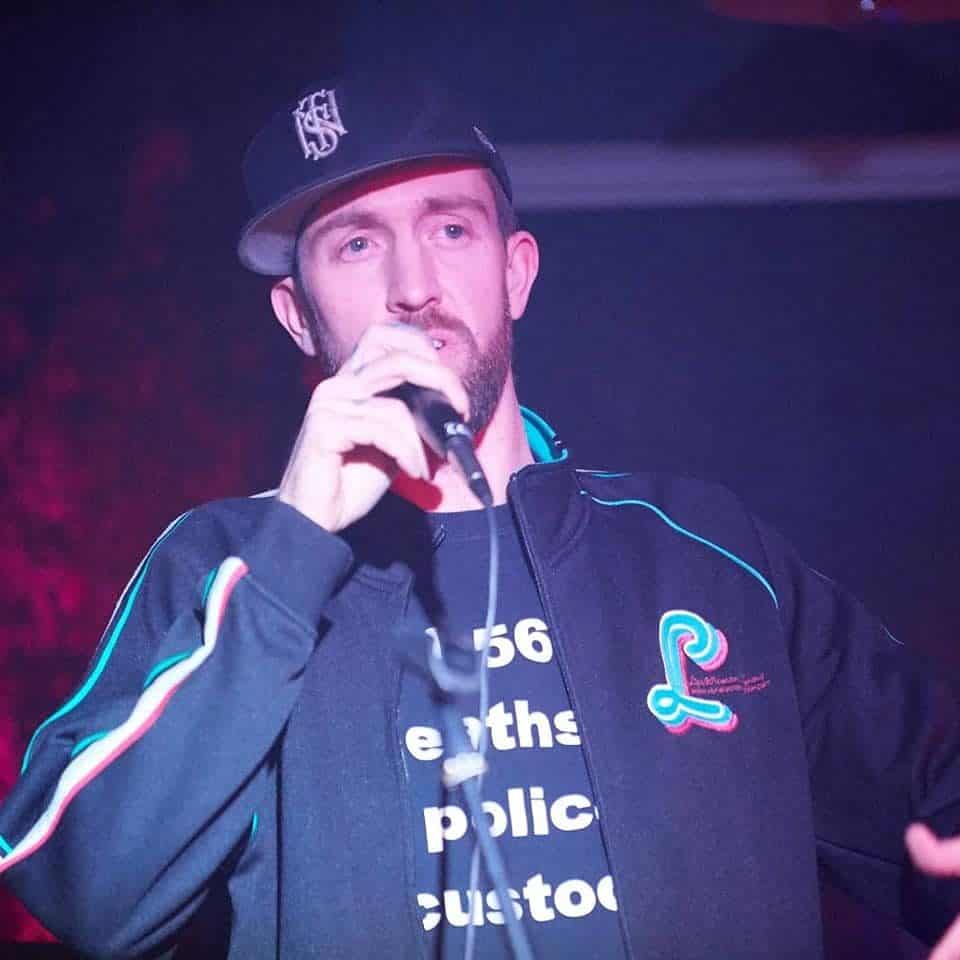
I spent the first 25 years of my life living in the lumpen-proletariat and working in informal economies, the last 20 have been spent organising in working-class communities and social justice movements more broadly. The former has always inspired and defined how I enter and engage with the latter. I’ve written two books about these experiences called “Chav Solidarity” and “Tracksuits Traumas and Class Traitors”. I was a founder of the Class Work Project and the Lumpen Journal for Poor and Working Class writers. Over the last 6 years my political work has primarily been organising and facilitating with lumpen and working-class communities who are working to address interpersonal harm in their communities without the state’s interference.
Liam Barrington-Bush
he/him
I am a St Pauls, Bristol-based facilitator with 20 years experience of campaigning and organising in the UK and Canada. I’ve organised youth exchanges involving hip-hop artists and First Nations activists; taken part in long-term housing occupations with residents fighting gentrification; supported migrant shop keepers to organise against immigration raids; and coordinated international media coverage in solidarity with Global South communities taking on Western mining companies.
I’ve facilitated and trained individuals and organisations around issues of power and privilege, collective organising practices and facilitation skills since 2012, and written a book on bringing collective organising into more traditional social change organisations, called “Anarchists in the Boardroom”.

Jasber (Jaz) Singh
he/him
Jasber (Jaz) is a facilitator and worked as a youth worker and community-based participatory action researcher with communities in Lancashire, Birmingham, and London. Whilst working at race equality organisation in South London, Jaz used civil, legal, and restorative justice approaches to provide solidarity and emotional support with people who experienced racist
harassment and violence. He has also initiated actions against the far-right, co-founded a refugee youth group in South London, and challenged the hostile environment that migrants face by working in a team to establish a migrant rights advice project. In south India, he
documented and challenged how racism/casteism undermined food, gender, and land justice.
Jasber currently researches the relationship between immigration policies and hunger in the UK, and how food sovereignty engages with difference.
Blog
The process of piloting EtM has surfaced a range of reflections from us, as a facilitation team.
We don’t want to pretend that the words here can really capture the insights of being in a physical space together, let alone the experiences that come from being in community and experiencing ‘the mess’ up close, but we hope that they can point to some of the themes we’re trying to make sense of together.
-
Analysis: as in the Estate Left
The estate left, as I understand it, begins there: not in certainty, not in slogans, but in the slow, difficult work of making solidarity possible again in places where it has been systematically broken.
-
What the Estate Left Makes Possible
The estate left… is not organised around parties, programmes, or demands. It emerges where abandonment is normalised and survival becomes collective by necessity.
-
Introducing the Estate Left
The Estate Left is the name I’ve given to a form of working-class politics that has been quietly building itself in the ruins of the old welfare state. It’s not a metaphor or a slogan. It’s the real, organised life of communities who have learned to survive without the institutions that once claimed to represent…
-
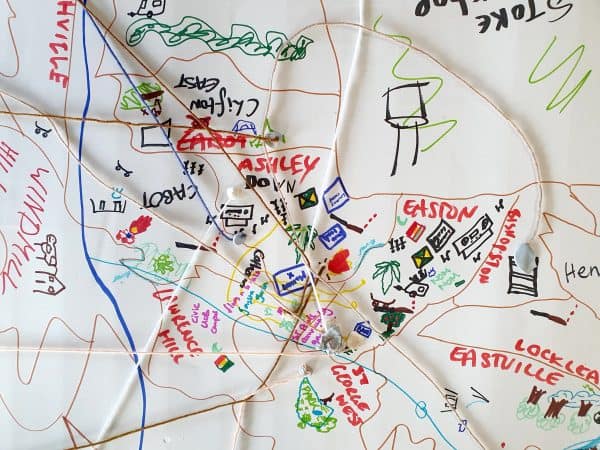
Outreach Paralysis: What can discomfort tell us about organising?
Organising involves building relationships across differences, and differences can surface deep feelings of discomfort in all of us. But what can we learn from those feelings? And how do our varied experiences of privilege and oppression change the foundations of these discomforts – as well as the steps we can take to shift them? Before…
-
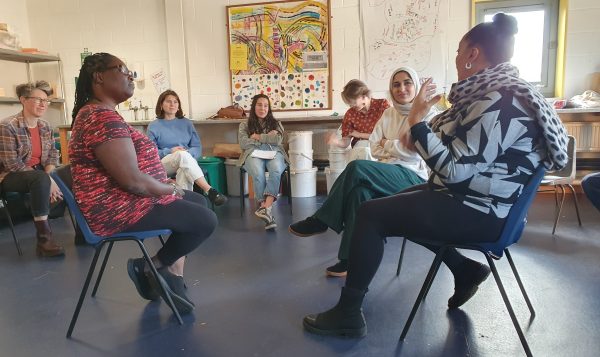
If this is how we think change happens, what does that mean?
Organising is in vogue these days in the UK. Those who used to talk about ‘activism’ and ‘campaigning’ have gradually switched up their language, but to what degree is that language shift reflective of different understandings of power and how social change happens? Years back, I remember participating in various debates in social justice spaces…
Card game
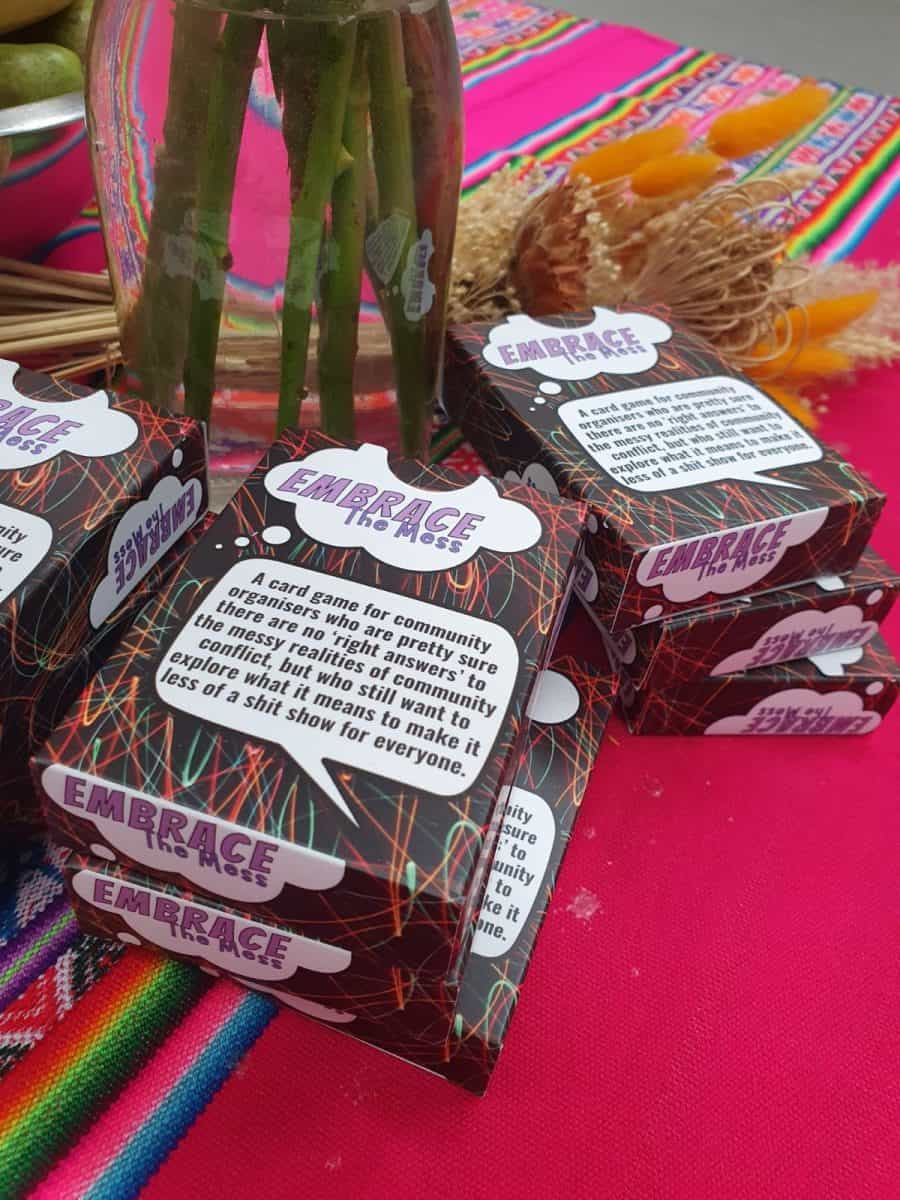
The Embrace the Mess card game is a focal point of the various versions of this workshop.
It’s a way for a dedicated team or a group of individual organisers to begin to surface some of the tensions, contradictions and complexities of conflict that plays out in community spaces. It aims to push all of us – through the randomness of the scenarios it creates – to question who is right or wrong, who holds what forms of power, and how we can best intervene, in a way that keeps the community together and minimises further harm.
Full guidance on the card game can be found at: Embrace the Mess cards detailed playbook
Offers
We’re currently offering four versions of the EtM workshops, but are up for talking through variations, if you don’t feel like what you’re looking for quite fits.
Through a series of participatory exercises we explore:
- What we do when we are around – or a part of – conflict in community spaces,
- The contradictions and complexities of how power operates within diverse working class and multiethnic communities, and
- The creativity needed to respond effectively and sensitively to the messy realities of community life.
We explore these themes through a series of:
- Group discussions grounded in real life scenarios,
- Practical games to help connect theoretical organising concepts with practices,
- Individual and small group reflection spaces.
Local weekend workshop
Length: 2-3 days
Audience: 12-20 local organisers and activists in a particular city or area, but working across a range of communities.
Responsibilities: On-the-ground logistics – from publicity, to venues and food, would be coordinated at your end. We would be in touch along the way to figure out the right combination of workshop materials/sessions to use with the kind of group you are imagining bringing together.
Costs: To be fundraised at your end, unless it fits the remit of funding we have already received.
Organisational training
Length: 2-3 days
Audience: Up to 20 staff within one organisation (or a few that work closely together)
Responsibilities: Coordinating calendars for all staff involved; providing venue, food, etc.
Costs: To be covered by your budget.
Regional residentials
Length: 4 days (see ‘Events‘ for current planned residentials)
Audience: Local organisers and activists who are looking to deepen their organising practices in a focused way, with others from outside of their local circles.
Responsibilities: We will organise these as funding permits.
Costs: TBD pending funding situation.
Local card games
Length: 2-3hrs
Audience: Usually an existing team of organisers (or youth workers, or other community-focused roles), looking for a way to shift and challenge their own instincts and perceptions of community conflict.
Responsibilities: Organised by a host organisation.
Costs: TBD pending funding situation.
EVENTS
We are currently hoping to organise two four-day funded residentials in the North and South of England, though have recently had a set-back with funding. If you’ve already applied, we’ll be in touch ASAP and will be posting details here as more details come together.
Contact US
This work is not set in stone.
If you’re specifically keen on one of the offers listed, or if you have a broad interest in the themes of the work and want to talk over possibilities, drop us a line below.
Thanks…